Record Store Day: how it started, and how to find the record you want
Finding the record on the official Record Store Day list is the beginning of the hunt. The shop you visit still has to order it, receive it and have a copy left when you reach the counter. A national release announcement cannot do any of those jobs.
A useful plan joins three things: the right territory's release list, a participating shop and that shop's instructions for the particular event. Then it leaves room for coming home with something else, or nothing. This guide follows the UK event on 18 April 2026 as a worked example. For a new trip, check the current event and shop notices.

How Record Store Day began
The idea came from a gathering of US record-shop owners in 2007. The first official event followed on 19 April 2008, with shops and the people around them at its centre. Spencer Hickman, then working at Rough Trade, brought it to the UK that year. The official UK history describes a handful of participating shops in the first year, growing to 50 in 2009. *1
US record-shop owners meet, and the idea starts.
The first official day. Spencer Hickman brings it to the UK: a handful of shops.
50 UK shops take part.
The UK event this guide follows.
That origin explains the unusual buying arrangements. There is a reason the day sends people through a shop door when ordering online would be easier. Special releases draw the crowd, but the shop is the point: its staff, its regulars and the chance to encounter music someone has chosen to put in front of you.
Choose the country before the release
Start with the official organiser for the territory where you intend to shop. Keep the event name and year visible as you browse. An April list, a different seasonal event and an old shop announcement can all appear in the same search results.
For the UK and Ireland, the official release list and store locator belong together. If you are shopping elsewhere, begin with that territory's organiser and participating stores.
Check the organiser's event announcement alongside the shop's dated opening notice before planning the trip. *2
Read one release all the way through
Air's Moon Safari - Live Theatre Herodes Atticus, Athènes appears in the official UK 2026 list as an LP on Warner Music France. Its description identifies a live recording in Athens. Those words after Moon Safari matter: the entry is for a live album, not simply a new colour of the familiar studio record. *3
Build your note from the fields that actually appear:
| Field | What to keep | What it cannot settle |
|---|---|---|
| Artist and full title | Air; the complete Athens live-album title | Whether a shop stocks it |
| Format and label | LP; Warner Music France | Colour, speed or other details the entry does not specify |
| Event | UK RSD 2026; check the organiser's event date separately | Your shop's opening time |
| Release type | Copy any stated designation exactly | Whether another version will ever appear |
| Quantity | Keep the figure and its stated territory, when supplied | How many copies your shop will receive |
The Air page does not provide a pressing quantity or a separate release-type classification. Leave those spaces blank. The small popularity count beside a catalogue item is not a pressing run.
If an edition’s colour or bonus track is the reason you want it, keep that detail in your note before deciding what an acceptable substitute would be.
Build a shortlist with three levels
A long list of interesting records is useful at home. At the counter, it needs an order.
First choice: the release you would make the trip for. Keep its full title, format and the reason this edition matters to you. Set the most you are comfortable spending before the queue supplies its own argument.
Acceptable alternatives: records you already want and would be pleased to buy instead. A regular edition can belong here. A different live performance may not, even when the sleeve carries the same artist's name.
Hear first: unfamiliar albums that caught your attention because of a description, artwork or recommendation. Find an official stream or artist upload before promoting them to the buying list. A limited pressing can wait for you to decide whether you like the music.
Keep alternatives within the same total budget. Missing your first choice needn't turn the rest of the list into a consolation order.
Follow the listing to an actual shop
The official UK directory lists Rough Trade East at 91 Brick Lane, London. That establishes participation and a destination. Next, follow the shop's own website to its event notice. *4

For 18 April 2026, Rough Trade's instructions specified an 8am BST opening for its UK shops, first-come service, no reservations and one copy of any particular release per person. It also asked customers to prepare a wishlist because staff would retrieve the records. That last detail changes how you prepare: a legible list of exact releases is more useful than expecting to browse a dedicated crate yourself. *5
- First come, first served
- No reservations
- One copy of any release per person
- Bring a wishlist: staff fetch the records
Participation still does not establish that Rough Trade East received the Air LP. Keep a separate space in your note for anything the shop actually says about that title. An expression of interest, an order request and confirmed stock are different answers.
Check the rules that change your visit
For the next event, read the shop's dated instructions for these points:
- Opening time and where the queue begins.
- Any queue-ticket system and what a ticket permits.
- Limits on copies or titles, and how staff handle your list.
- Access arrangements, including whom to contact in advance.
- When any remaining stock may go online.
The UK FAQ prohibits advance reservations and pre-sales. It also links to an accessibility guide; check that and the particular shop's arrangements before travelling if the standard queue is difficult for you. *6
Do not assume one recurring online-sale time. Rough Trade's notice for the April 2026 event specified 8pm BST on Monday 20 April for remaining UK stock. That is a dated shop instruction, not a timetable for the next event or for another territory.
At the counter, check the record
Keep the full release note available offline or on paper. If the first choice has gone, move to an alternative you selected while you still had room to think.
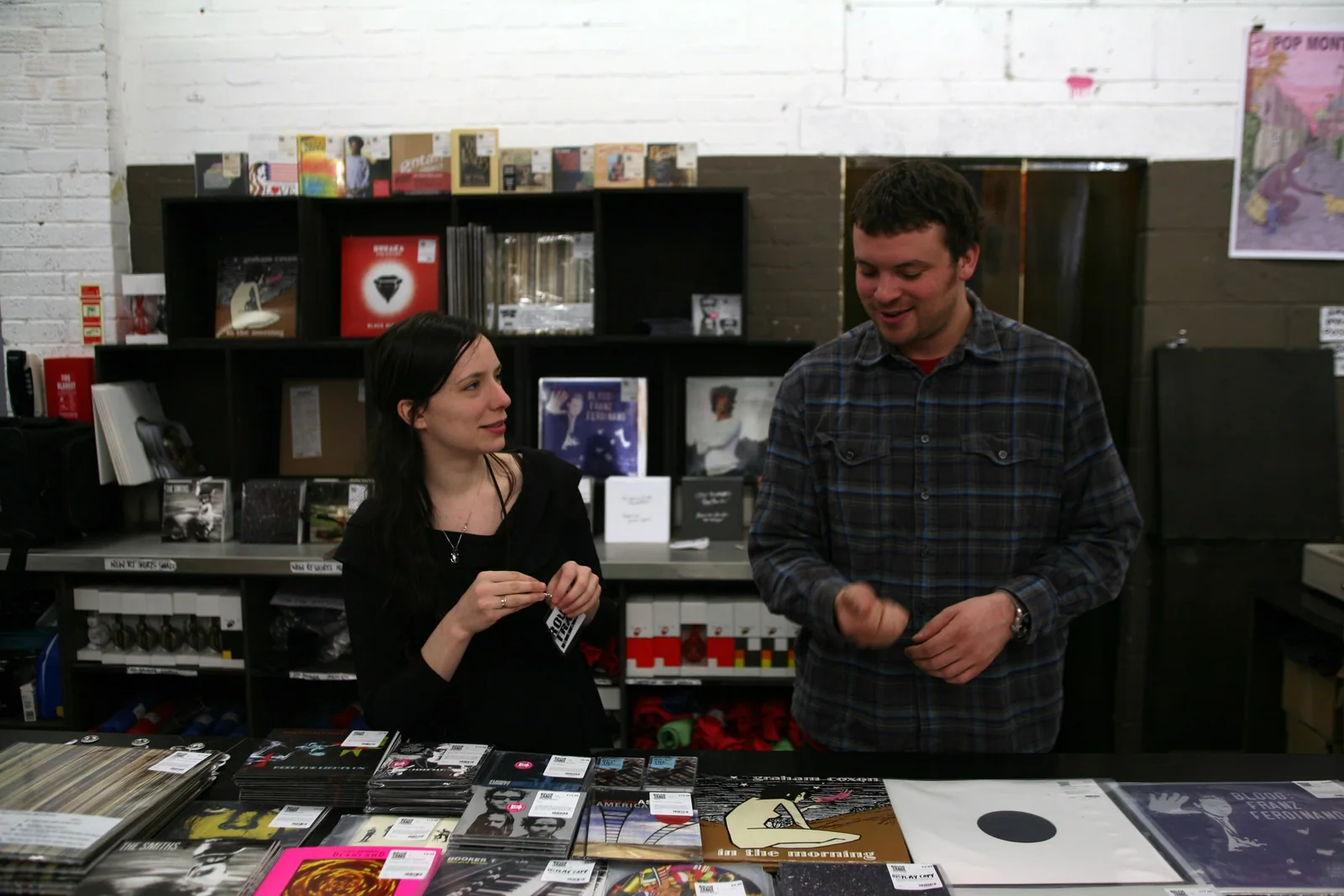
Before leaving, check the artist, full title and stated format against your list. Ask about any edition detail that remains unclear, especially if opening sealed packaging would affect the shop's returns policy. Keep the receipt. Our pressing-identification guide covers the next checks when sleeve and label information need closer comparison.
If your list is sold out, ask for a recommendation to hear at home. You needn’t buy a substitute that day.
Sources and notes
*1. Record Store Day UK's official history: 2007 origin, first event on 19 April 2008, UK introduction and early participation. Return
*2. Official 2026 list announcement, 4 February 2026: event date of Saturday 18 April. The Air catalogue entry below displays 17 April; that field should not determine travel plans. Return
*3. Air's official UK release entry: title, LP format, Warner Music France label and live-recording description. Return
*4. Official Rough Trade East directory entry: participating shop and address. Return
*5. Rough Trade's 2026 event notice, 17 April 2026: opening, purchase limits, staff-assisted service and territory-specific online-sale times. Return
*6. Record Store Day UK FAQ: reservations, pre-sales and link to accessibility guidance. All linked sources checked 25 October 2026. Return